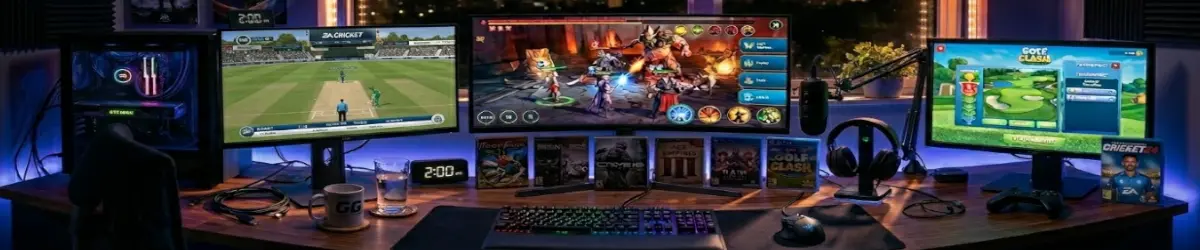
Why Game Reviews Matter
2026-06-07
Play To Learn - Play To Tell
More Than Just Entertainment
Video games are often dismissed as simple entertainment.
Something to pass time.
Something without deeper value.
But games are more than that.
They are interactive systems.
They are rule-based worlds.
They are simulations of decision, consequence, and creativity.
What Makes Games Unique
Unlike films or books, games require participation.
The player is not just observing a story.
The player is inside the system.
Every action has structure:
- Movement
- Choice
- Strategy
- Timing
- Risk and reward
Games respond to input, creating a feedback loop between player and system.
Why Reviews Are Important
Game reviews are not only about rating enjoyment.
They are about understanding design.
A good review explores:
- How the game plays
- How systems interact
- How difficulty is structured
- How learning happens inside the game
- How engaging the experience feels over time
This turns gaming into analysis rather than passive consumption.
Games as Learning Systems
Games often teach without explicitly trying to teach.
They develop:
- Problem-solving skills
- Pattern recognition
- Resource management
- Strategic thinking
- Reaction timing
- Creative experimentation
Even simple games can contain complex systems beneath the surface.
The PlebWare Perspective
Within PlebWare, leisure is not separate from learning.
It is part of it.
Game reviews fit into this idea because they treat games as systems to be understood, not just products to be consumed.
A good review asks:
- What does this system reward?
- What does it ignore?
- How does it guide player behaviour?
- What kind of thinking does it encourage?
What This Section Covers
The Game Reviews section will explore:
- Indie games
- Simulation games
- Strategy games
- Creative sandbox games
- Narrative experiences
- System-based gameplay analysis
- Learning from game mechanics
- Comparisons between design approaches
The focus is not hype or popularity.
The focus is understanding how games work.
Leisure as Recovery and Exploration
Leisure is not wasted time.
It is the space where the mind resets and explores freely.
Games provide structured leisure.
They offer goals, systems, and challenges without real-world consequences.
This makes them valuable not only for enjoyment, but also for mental engagement.
Closing Thought
A game is not just something you play.
It is something you interact with, learn from, and experience as a system.
And reviewing it means understanding that system more deeply.
Play is one of the oldest forms of learning.
O.C. Verricchio