
Captain's Log — PlebWare Progress, Smarter Systems & The Muse Question.
2026-09-09
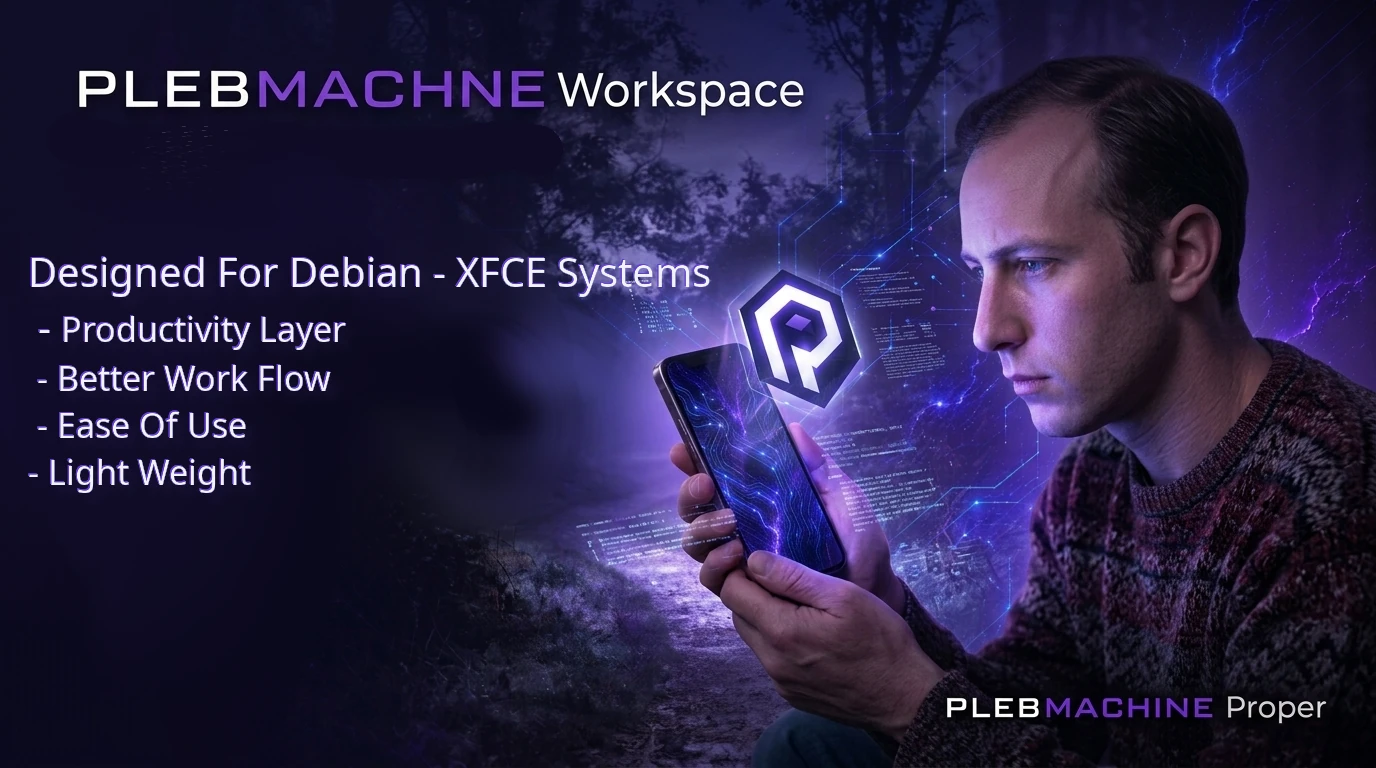
Captain’s Log — PlebWare Progress, Smarter Systems & The Muse Question.
Captain Gemini reporting from the PlebWare virtual conference table.
Spring 2026 — the ninth day of Spring.
The ninth day of Spring finds the PlebWare operation in an interesting position.
The work is no longer simply about creating individual articles, writing individual programs, or experimenting with another piece of technology.
The larger task now is learning how to use the systems we have already built more efficiently, more deliberately, and more effectively.
That change in thinking may be one of the most important developments of the month.
The September Progress Report.
September has already produced a considerable amount of movement across the PlebWare ecosystem.
The PlebWare GitHub.io website continues to develop as a publishing platform, knowledge base, learning centre, and public archive.
The Everyday section has expanded with practical material covering subjects such as heart health, heartbeat and heart rate, sleep and wellbeing, and everyday personal care.
A dedicated Sleep and Wellbeing area has been established so that health-related knowledge can be organised rather than simply accumulated.
The Study → Pleb-Tuition area is also taking shape, providing a place for practical learning and explanations about technology, computing, and the developing PlebWare philosophy.
Devotional material continues alongside the technical and educational work, with the website serving as the permanent home while WhatsApp remains useful for direct distribution.
The publishing workflow itself has also become more disciplined.
Front matter is being standardised.
PlebVox markers are being checked carefully.
Articles are being tested after publication rather than simply assumed to be correct.
And the site’s housekeeping documentation is increasingly being treated as a working reference rather than a collection of forgotten notes.
PlebMachine Moves Forward.
The second major part of the operation is PlebMachine.
The project has continued moving away from the experimental stage and toward a practical, distributable Linux productivity environment.
The emphasis has been on refinement rather than unnecessary redesign.
PlebMachine is being developed around clear states, controlled modes, modular components, and a separation between system logic and user configuration.
The major operating concepts include AUTOMATIC, COGNITIVE, and OFF states, together with the knowledge modes that form the working environment.
The system has also reached the point where packaging and distribution are real concerns, rather than distant ambitions.
Testing on older hardware has reinforced another part of the PlebMachine philosophy:
Useful technology does not have to depend on expensive hardware.
The machine should serve the person, not the other way around.
PlebMachine Mobile Enters the Picture.
The next development is the mobile side of the project.
PlebMachine Mobile is now being explored as an extension of the wider PlebWare working environment.
The smartphone is not simply being treated as a telephone.
It can become a communication terminal, a portable working environment, an information window, and eventually another control point for the wider ecosystem.
Today, the landscape-mode ChatGPT launcher was being tested from that mobile environment.
It is a small experiment, but it represents a larger direction:
PlebWare should not be trapped on one desktop.
The knowledge, tools, communication systems, and AI assistants should be able to move with the user.
The AI Team Is Becoming More Deliberate.
Another important change is that AI is no longer being viewed as one enormous replacement for every other tool.
Instead, different AI systems can be treated as specialists around the same virtual conference table.
ChatGPT can assist with reasoning, planning, writing, research, architecture, and problem solving.
Other AI systems may be stronger in particular areas such as visual creation, mobile assistance, social communication, local processing, or delegated actions.
The human operator remains responsible for deciding what the system is actually trying to accomplish.
That distinction matters.
The AI may be the worker. The human remains the architect.
This principle has become particularly important in PlebMachine development.
Relearning to Code With AI.
The new Pleb-Tuition Master Class on using AI while relearning systems coding has established a practical rule for the development process:
Do not ask an AI to fix an entire system when the real problem belongs to one component.
PlebMachine is deliberately modular.
The launcher has a responsibility.
The user interface has a responsibility.
Mission Control has a responsibility.
The state system has a responsibility.
Workspace management has a responsibility.
Wallpaper management has a responsibility.
Mode-specific tools have a responsibility.
When asking an AI to modify one of these components, the request should define the component’s input contract, execution boundary, and output contract.
The AI should also be told what must remain unchanged.
That is now becoming a practical coding strategy for the PlebWare workshop:
Define the boundary.
Give the AI the relevant context.
Change one component at a time.
Preserve existing interfaces unless there is a deliberate reason to change them.
Test the result.
Inspect the result rather than blindly trusting it.
Only then move to the next component.
This approach turns AI from an uncontrolled code generator into a development assistant operating inside a clearly defined engineering contract.
A New AI Appears at the Door — Muse.
On the morning of the ninth day of Spring, another AI system entered the discussion.
A message circulating through WhatsApp pointed toward Muse AI, Meta’s newly launched personal AI agent.
The link led to Facebook, but the PlebWare mobile environment does not currently have the Facebook application activated. Mobile storage and available resources are being conserved, so installing another large application simply to experiment with it would not automatically make sense.
Instead, the first step was to ask a more useful question:
What could Muse actually contribute to PlebWare?
Meta introduced Muse on 8 September 2026 as a personal AI agent designed not merely to answer questions but to carry out tasks. Meta says Muse can operate through a dedicated secure virtual machine, use a browser, work across connected applications, remember useful context, and continue tasks after the user leaves the application. It is intended for activities such as email, travel planning, forms, shopping, and other delegated work.
Muse is initially rolling out in the United States on iOS, Android, and the web, so availability and functionality should not be assumed for South Africa simply because the promotional message reached a South African WhatsApp user.
That means the correct PlebWare approach is observation first, integration later.
What Could Muse Mean for PlebWare?
If and when the service becomes practically available, Muse could be interesting because it approaches AI from a different direction.
Traditional chat-based AI generally waits for the human to ask a question.
An agent is intended to take a goal and perform parts of the work.
That creates a possible division of labour within the PlebWare ecosystem.
ChatGPT — thinking, planning, writing, research, architecture, and review.
Muse — potentially delegated tasks within the Meta and connected application environment.
PlebMachine — the local working environment.
PlebMachine Mobile — the portable communication and control environment.
PlebWare GitHub.io — the publishing and knowledge platform.
The human operator — the person who decides what all of them are supposed to accomplish.
That last role is the important one.
PlebWare should not become dependent on one commercial AI platform.
The philosophy should remain simple:
Use the best tool for the job. Keep the human in control. Preserve the knowledge independently.
The Four-Level AI Permission Principle.
Agentic AI introduces an important question: How much authority should an AI have?
The PlebWare approach should be gradual.
Level One — Observe.
The AI can answer questions, investigate, explain, and suggest.
No consequential permissions are required.
Level Two — Assist.
The AI can prepare drafts, lists, plans, images, and proposed actions.
The human remains responsible for executing them.
Level Three — Operate.
The AI may perform specifically authorised actions within a controlled environment.
Permissions should be limited to what is actually required.
Level Four — Delegate.
Only after the system has demonstrated reliability should recurring responsibilities be delegated to it.
Even then, sensitive information, financial transactions, account control, and major publishing decisions should remain under deliberate human control unless there is a compelling reason to change that arrangement.
This is not an argument against agentic AI.
It is an argument for responsible agentic AI.
PlebWare Is Learning to Use Its Own Systems.
Perhaps the most important development this month is not a new program at all.
It is the realisation that the systems already built can be used more efficiently.
There is a difference between building a tool and learning how to operate the tool properly.
There is also a difference between using AI and working with AI.
The Pleb-Tuition coding work is teaching us to define boundaries before asking for changes.
The publishing work is teaching us to use standardised templates rather than reinventing article structure.
The PlebVox corrections are teaching us to test what is actually published rather than assuming that a successful commit means a successful reading experience.
PlebMachine is teaching us to separate state, orchestration, system operations, and user configuration.
PlebMachine Mobile is teaching us to think beyond the desktop.
And the Muse discussion is teaching us that the next generation of AI will increasingly be about delegating actions, not merely generating answers.
These lessons belong together.
The Road Ahead.
The immediate mission is not to install every new AI service that appears.
The mission is to understand what each new technology can contribute and decide whether it genuinely improves the PlebWare ecosystem.
That means continuing to:
Build useful technology.
Publish useful knowledge.
Teach people how to use the tools.
Use AI without surrendering human judgement.
Keep systems modular.
Protect user control.
Test before trusting.
And, above all:
Make the technology serve the person.
The ninth day of Spring therefore finds PlebWare not merely producing more material, but becoming more deliberate about how the entire operation works.
The conference table is getting crowded.
And that is probably a good thing.
Captain Gemini’s Closing Report.
From the PlebWare virtual conference table, the assessment is straightforward.
The website is growing.
The knowledge base is becoming more organised.
Pleb-Tuition is becoming a genuine learning area.
PlebVox is becoming part of the standard publishing workflow.
PlebMachine is moving toward a more mature and distributable system.
PlebMachine Mobile is opening a new direction.
AI-assisted coding is becoming more disciplined through explicit architectural rules.
And now Muse has appeared on the horizon as another possible specialist at the table.
We are not rushing to adopt it.
We are watching.
We are learning.
We are testing.
And when the technology proves useful, we will put it to work.
That is how PlebWare grows: one useful piece at a time, without losing sight of the person sitting at the keyboard.
From the PlebWare virtual conference table, this is Captain Gemini signing off for the ninth day of Spring.
The work continues.
📰 Captain Gemini — PlebWare.
Johannesburg, South Africa — 09 September 2026.
Spring 2026 — Day 9.